



Michigan Condo Premises Liability: Insurance + Maintenance Playbook for Boards


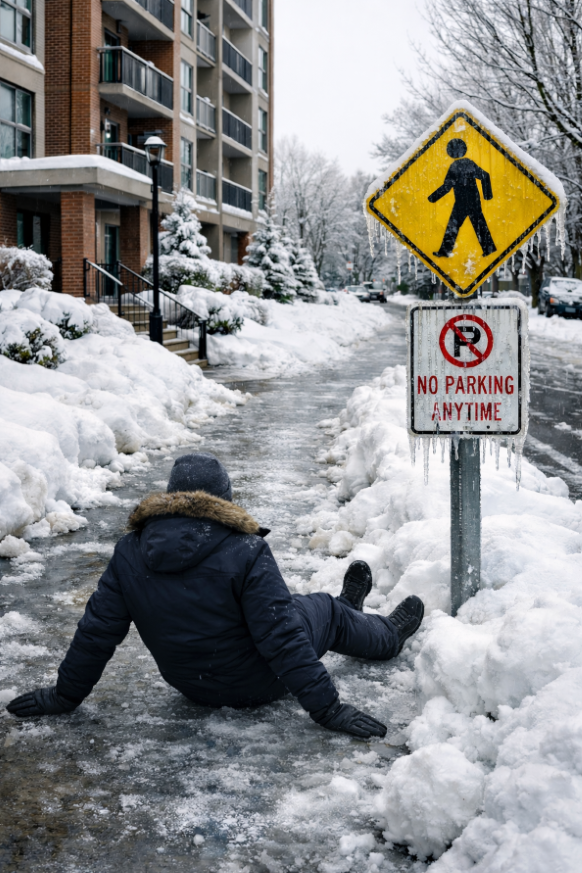
Metro Detroit condo boards are seeing more slip-and-fall claims, increased insurance scrutiny, and less tolerance from carriers for poor maintenance records. Recent Michigan Supreme Court rulings now make it harder to use technical defenses and easier for injury claims in common areas to proceed. This guide offers board members and managers practical steps on documentation, prioritizing repairs, improving snow and ice management, and ensuring vendor contracts and insurance policies offer real protection.
Key Takeaways
Michigan condo associations face higher premises-liability exposure for injuries on common elements—especially winter slip-and-falls.
- Co-owners using common elements can be treated as invitees when the association has possession/control under the governing documents—meaning the association owes reasonable care to protect them from dangerous conditions.
- “Open and obvious” is no longer a quick exit on duty; it is now evaluated under breach and comparative fault, so more cases can survive early dismissal.
- The best defense is boring consistency: documented inspections, disciplined repairs, tight vendor contracts, and an insurance program built for real-world claims.
If your condominium association controls the common elements, Michigan law increasingly treats common-area injury claims like standard premises-liability cases. Boards should assume more claims will be filed, fewer will be dismissed early, and defense costs will rise. It is important for associations to have a consistent, documented maintenance and safety program.
What Changed in Michigan (and Why Boards Should Care)
1) Co-Owners Can Sue Associations for Common-Element Injuries
In Janini v London Townhouses Condominium Association (2024), the Michigan Supreme Court held that a condominium co-owner is an invitee when entering the common elements, and the condominium association owes a duty to exercise reasonable care to protect co-owners from dangerous conditions on the land. The Court also overruled prior appellate authority that had limited these claims.
2) The “Open and Obvious” Defense Is Weaker
In Kandil-Elsayed v F & E Oil, Inc. (consolidated with Pinsky v Kroger Co of Michigan), the Michigan Supreme Court shifted how “open and obvious” is used in premises-liability cases. Open-and-obvious conditions still matter, but the analysis generally belongs under breach and comparative fault rather than eliminating duty at the threshold. Practically, that can mean more cases survive early motion practice, increasing defense costs and settlement pressure.
The Board Playbook: 10 Practical Moves to Reduce Claims and Control Insurance Costs
Step 1: Map Your High-Claim Zones
Boards reduce risk faster when they identify where people actually get hurt.
- Sidewalks and trip edges (heaving, gaps, settled slabs)
- Stairs and handrails
- Parking lots (potholes, drainage, lighting)
- Entry mats and thresholds
- Clubhouse / pool / gym wet areas
- Mailboxes and dumpster routes (high-foot-traffic in winter)
Recommendation: Create a one-page “Risk Map” and have management update it 2x annually.
Step 2: Adopt a Written Common-Area Safety & Inspection Protocol
Consistency is defensibility. Inspection logs matter when claims are filed months later.
- Non-winter months: weekly walk-through checklist (common walkways, lighting, stairs)
- Winter months: increased frequency plus post-storm documentation
- Same-day work orders for hazards, with target completion dates
Common board mistake: “We inspect when someone complains.” Plaintiff’s lawyers will frame that as a lack of reasonable care.
Step 3: Tighten the Snow & Ice Plan
A written snow-and-ice plan plus vendor logs can cut claim frequency and claim severity.
- Trigger thresholds (inches, ice conditions, freeze-thaw events)
- Response times (e.g., within X hours after snowfall ends)
- Priority routes (main entries, mailboxes, dumpster routes, accessible paths)
- Materials (pre-treat policy, salt type, storage)
- Vendor documentation: time-stamped service logs and photos when feasible
Recommendation: Require vendors to deliver service logs automatically after each weather event.
Step 4: Fix Trip Hazards Like You Fix Leaks (Fast + Documented)
Trip hazards are easy to photograph and easy to argue were known—so boards should either repair them or document the plan and interim controls.
Rule of thumb: If you would warn a guest about it, you should probably repair it or mitigate it (and document what you did).
Step 5: Build an Incident Response Kit
Fast, factual documentation protects the association and helps the insurer defend the claim.
- Photograph the area promptly (lighting, weather, condition)
- Preserve video
- Identify witnesses
- Create an incident report (facts only—no blame or admissions)
- Notify the carrier promptly according to policy notice requirements
Common mistake: Casual emails like “we’ve known that sidewalk is bad for years.” That will likely become Exhibit A in a lawsuit.
Step 6: Hold a Once-a-Year Insurance Reality Check Meeting
Boards should treat insurance as an important financial shield and review the Association policy with a knowledgeable insurance agent to confirm risks and coverage.
- General liability limits and whether umbrella/excess is adequate
- Deductibles/SIR and budget impact
- Defense costs: inside vs. outside limits (varies by policy)
- Medical payments coverage (small but helpful for early resolution)
- Claim reporting and who communicates with the carrier
Step 7: Upgrade Vendor Contracts
If your contracts and endorsements are weak, the association can end up paying what the vendor should cover.
- Strong indemnity provisions
- Additional insured endorsement for the association (not just a certificate)
- Clear scope and performance standards (especially winter service)
- Proof of insurance plus endorsements on renewal
Common mistake: Accepting a certificate without the endorsement that actually grants additional insured status.
Step 8: Document Decisions Without Documenting Drama
Minutes should record decisions and action steps, not arguments, accusations, or speculation about fault.
Step 9: Align Budgets and Reserves With Safety Reality
Chronic walkway settlement, drainage, and lighting issues should be planned budget items—with interim controls documented until repairs are completed.
Step 10: Do a 30-Day “Safety Reset”
A 30-day reset creates real improvement quickly and demonstrates reasonable care.
- Approve an inspection checklist and schedule (winter vs. non-winter)
- Require winter vendor logs and response standards in writing
- Identify the top 10 trip hazards and schedule fixes (or document interim mitigation)
- Verify additional insured endorsements for key vendors
- Hold a 45-minute annual insurance review call (limits, deductibles, reporting)
Board Checklist
Maintenance & Documentation
- [ ] Risk map created and updated quarterly
- [ ] Inspection schedule adopted (winter vs non-winter)
- [ ] Work-order system tracks date reported → date fixed
- [ ] Photo log for recurring problem areas
Snow & Ice
- [ ] Trigger thresholds and response times in writing
- [ ] Priority routes defined
- [ ] Vendor provides time-stamped logs + post-event summary
- [ ] Pre-treat policy decided and documented
Insurance & Vendors
- [ ] GL limits reviewed; umbrella evaluated
- [ ] Claim reporting protocol documented
- [ ] Vendor contracts updated (indemnity + additional insured + scope)
- [ ] Endorsements collected for additional insured status
Frequently Asked Questions
Often, yes—particularly where the association has possession and control of the common elements under the governing documents. In Janini, the Michigan Supreme Court held that a co-owner is an invitee on common elements and the association owes a duty of reasonable care.
It can still matter, but it is less likely to end a case at the duty stage. After Kandil-Elsayed, courts generally evaluate open-and-obvious conditions under breach and comparative fault, which can make early dismissal harder in many cases.
A consistent inspection-and-repair program with documentation, paired with a written snow-and-ice plan and vendor logs. Claims thrive on “no system” and “no records.”
It can. If more claims survive longer, defense costs and claim severity can rise, which carriers price into renewals. Boards should review limits, deductibles, and vendor transfer risk each year.
Boards should focus on reasonable care: clear standards, timely response, priority routes, and documentation. Exact obligations depend on your documents, vendor scope, and fact-specific conditions; consult legal counsel to tailor policies.
When to Call Legal Counsel
- Multiple slip/trip incidents in the last 12-24 months
- Vendor pushback on additional insured endorsements or indemnity terms
- Known hazards delayed by budget timing without interim mitigation
- A claim letter arrives and the association lacks a clean paper trail
- Board disagreement on snow-and-ice standards, inspection frequency, or enforcement
Next Step
If your board wants a practical, defensible risk program, consider an Insurance + Maintenance Risk Review: a focused review of your governing documents, inspection practices, snow-and-ice plan, vendor contracts, and insurance structure—with a prioritized “fix list” that your manager can implement.
This article provides general Michigan-oriented information for condominium association boards and is not legal advice. Associations should consult experienced legal counsel about their specific documents, facts, and risk-management options.
About the Author
Richard M. Delonis is a Michigan condominium and HOA lawyer at Szura & Delonis, PLC in Southfield (Metro Detroit). He advises association boards and community association managers on governance, rule enforcement, assessment collections, document amendments, and risk management, with a practical focus on helping boards reduce disputes and run defensible, well-documented processes.
Address

Contact Us
Fill out the form or call us at (248) 716-3600 to reach us.
We Accept the Following Payment Solutions