




Building a Data Center in Michigan: The Legal Issues Owners and Contractors Need to Plan For


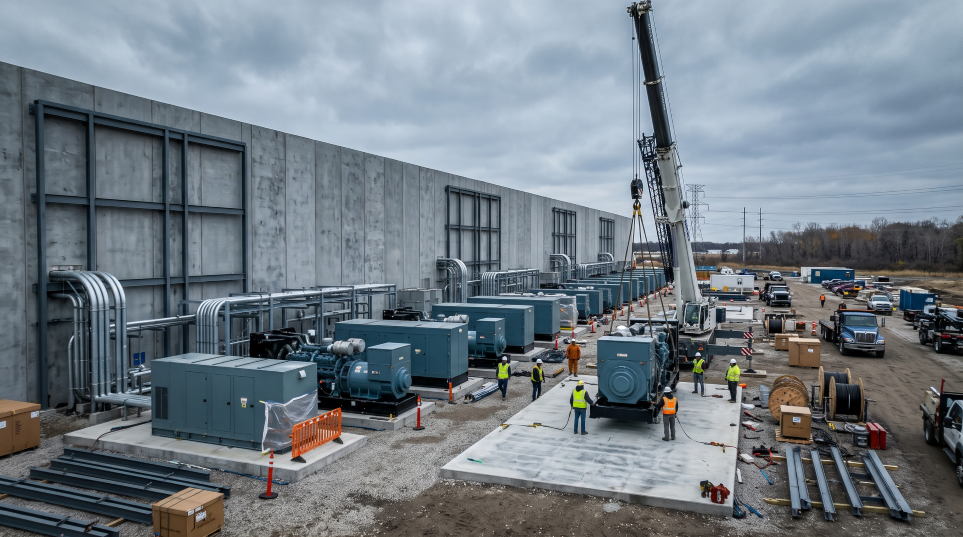
Data centers have become one of the biggest construction stories in Michigan. Multibillion-dollar campuses have been proposed from Washtenaw County to Kent County, and smaller facilities are moving forward across Metro Detroit. For general contractors, subcontractors, and suppliers, these projects can represent years of steady work. For owners and developers, they bring local approvals, utility negotiations, tax compliance rules, and contract risks that look very different from an ordinary commercial build. Here is what project participants need to understand before the first shovel hits the ground.
What are the main legal risks in building a data center in Michigan? The biggest risks are securing local zoning approval, locking in electric power on a realistic timeline, and managing schedule, delay, and tax-compliance exposure in the construction contract. Long-lead equipment, liquidated damages, pay-if-paid clauses, indemnity limits, and payment protection under the Michigan Construction Lien Act and the Builders Trust Fund Act all require careful attention from day one.
Why Michigan Is Seeing a Data Center Boom
A major change in state tax law helped accelerate the wave. In late 2024, the Legislature expanded Michigan’s data center sales and use tax exemptions to cover qualifying hyperscale “enterprise data centers” under MCL 205.94cc (2024 PA 181, effective April 2, 2025) and MCL 205.54ee (2024 PA 207, effective April 17, 2025). To qualify, a project generally must involve at least $250 million in capital investment and create at least 30 qualified new jobs paying 150 percent or more of the prosperity region median wage. The facility must also satisfy water-capacity and conservation standards, obtain a recognized green building certification (such as LEED, ENERGY STAR, BREEAM, or Green Globes), and procure clean energy equal to 90 percent of its forecasted electric use under MCL 460.1051, often through a qualifying long-term utility contract.
Because the Michigan Strategic Fund (MSF) cannot issue new enterprise data center certificates after December 31, 2029 (MCL 205.54ee(9)), developers are pushing aggressive construction timelines—even as lawmakers in Lansing continue debating bills to tighten eligibility, reporting, and water-use requirements.
The exemption reaches well beyond servers and racks. It covers backup generators, UPS systems, cooling and environmental controls, and qualifying construction and building materials. For contractors, this creates a critical compliance trap. Ordinarily, Michigan construction contractors are treated as the taxable consumers of materials they affix to real estate (Michigan Department of Treasury RAB 2025-18). Under the enterprise data center statutes, the exemption extends to contractors only for qualifying equipment and materials affixed to or made a structural part of the certified facility, only for purchases made after the MSF certificate is issued, and only if the contractor complies with strict documentation rules—including submitting an annual summary report to the qualified entity. Early-work purchases ordered before certification, or sloppy invoicing and reporting, can turn a six-percent tax savings into an expensive audit and indemnity dispute.
Zoning and Community Approval Come First
Can a Michigan township or city stop a data center? Under Michigan’s Zoning Enabling Act, a municipality generally cannot totally exclude a lawful land use when there is a demonstrated public need for the use and an appropriate location for it (MCL 125.3207; Kyser v Kasson Twp, 486 Mich 514 (2010)). However, a township, city, or village can regulate data centers through its zoning ordinance, require special land use approval with strict site standards, and enact a temporary moratorium while studying the issue.
Since late 2025, dozens of Michigan communities across Oakland, Macomb, Washtenaw, Genesee, and other counties have adopted temporary data center moratoriums or enacted specialized data center zoning ordinances. Neighbors routinely raise concerns about generator noise, water consumption, new transmission infrastructure, and electric rates. In Washtenaw County’s Saline Township, the board denied a rezoning for a massive campus in September 2025, the developer sued under an exclusionary-zoning theory, and the parties resolved the case through a court-approved consent judgment in October 2025 that allowed the project to proceed (with subsequent resident intervention challenges denied in early 2026).
Owners should build zoning contingencies and realistic entitlement periods—accounting for potential litigation or appeal windows—into land purchase agreements. Contractors should avoid committing to unconditional mobilization or start dates until final approvals are secured.
Power Is the Critical Path
A data center is only as viable as its electric supply, and the Michigan Public Service Commission (MPSC) has established strict ratepayer protections for very large electric loads:
- Consumers Energy (November 2025, Case No. U-21859): Approved large-load terms for customers of 100 megawatts or more, including a 15-year minimum contract, minimum billing at 80 percent of contracted demand, exit fees, and collateral requirements.
- DTE Electric – Saline Township (December 2025, Case No. U-21990): Conditionally approved special contracts for a 1,383-megawatt campus with a 19-year minimum term, an 80 percent minimum billing demand, and ratepayer cost protections.
- DTE Electric – Van Buren Township (October 2026, Case No. U-22058): Approved special contracts for a Google data center featuring a 20-year term, an 80 percent minimum billing demand, a 15-year minimum early termination payment, and credit and collateral protections (with post-order rehearing scrutiny continuing), while the Commission separately evaluates a general large-load tariff for DTE.
For owners, these utility agreements carry steep, long-term financial and collateral commitments. For everyone on the build, they raise a practical construction question: what happens if the substation or utility service is not energized when the building is ready?
The construction contract must address utility delays explicitly. In Michigan, no-damages for-delay clauses are generally enforceable, subject to narrow exceptions such as active owner interference, bad faith, abandonment, or delays not contemplated when the contract was signed. Without a clear carve-out tying utility energization to substantial completion, commissioning, and compensable extended general conditions, a contractor may receive a time extension while absorbing months of idle overhead out of pocket.
Contract Structure, Schedule Risk, and Liquidated Damages
Most large data centers are delivered under design-build, construction manager at risk with a guaranteed maximum price (GMP), or engineering, procurement, and construction (EPC) contracts. Every one of those models prioritizes speed, and owners routinely demand substantial daily liquidated damages because missed completion dates translate directly into lost hosting or tenant revenue.
Are liquidated damages enforceable in Michigan? Yes, provided the stipulated amount is a reasonable forecast of the owner’s probable actual damages rather than a penalty. Michigan courts evaluate reasonableness based on the conditions existing when the contract was signed, not with the benefit of hindsight, and are particularly willing to uphold liquidated damages where actual damages are uncertain or difficult to calculate (Barclae v Zarb, 300 Mich App 455, 485 (2013); St Clair Medical, PC v Borgiel, 270 Mich App 260, 270–271 (2006)).
On a hyperscale data center, those standards tilt heavily toward enforceability. Contractors should negotiate an aggregate cap on liquidated damages, a well-defined list of excusable delays covering utility energization and supply-chain bottlenecks, and a mutual waiver of consequential damages. Without that waiver, an owner whose liquidated damages hit a cap—or are challenged—may attempt to pursue massive lost tenant revenue directly.
Notice provisions demand the same discipline. Many data center contracts require formal written notice of a delay or claim within just a few days, and failing to comply can forfeit an otherwise valid claim.
Long-Lead Equipment, Price Escalation, and Change Orders
Switchgear, transformers, chillers, and backup generators frequently carry lead times measured in many months, and sometimes more than a year. Owners often procure critical equipment directly and turn it over to the contractor as owner-furnished, contractor-installed (OFCI) equipment. When they do, the contract should spell out who bears the risk of late factory delivery, off-site storage, transit and builder’s risk insurance, and warranty coordination.
Contractors procuring their own equipment should push for a clear price escalation clause covering tariffs and material spikes—along with a change-in-law clause addressing shifts in state tax or permitting rules—rather than absorbing volatility inside a fixed price. Change orders are also common as tenant power-density and liquid-cooling designs evolve mid-build. Follow the contract’s written change order procedure every time, secure written authorization before performing extra work whenever possible, and document critical-path schedule impacts as they happen.
Getting Paid: Liens, Sworn Statements, Pay-if-Paid, and Trust Funds
How do contractors protect lien rights on a Michigan data center project? Private data center builds are governed by the Michigan Construction Lien Act, MCL 570.1101 et seq. Subcontractors and suppliers must strictly satisfy four statutory milestones: serve a Notice of Furnishing within 20 days of first furnishing, record a Claim of Lien within 90 days of last furnishing, serve the recorded lien within 15 days after recording, and file suit to foreclose within one year after the lien was recorded.
- Notice of Furnishing (20 Days): Subcontractors and suppliers generally must serve a Notice of Furnishing within 20 days after first furnishing labor or material (MCL 570.1109(1)). General contractors in direct contract with the owner are exempt (MCL 570.1109(3)), and laborers follow separate wage-notice rules (MCL 570.1109(2)).
- Claim of Lien (90 Days): Record the claim of lien with the county register of deeds within 90 days after last furnishing labor or material (MCL 570.1111(1)).
- Post-Recording Service (15 Days): Serve a copy of the recorded claim of lien (along with proof of service of the Notice of Furnishing, if required) on the owner’s designee within 15 days after recording (MCL 570.1111(5)).
- Foreclosure Suit (1 Year from Recording): File a lawsuit to foreclose the lien within one year after the date the claim of lien was recorded (MCL 570.1117(1)).
Start by obtaining the Notice of Commencement so you serve the correct owner and designee. Data center campuses are frequently owned by special-purpose entities (SPEs) or built on ground leases—where a construction lien under MCL 570.1107(1) may attach only to the tenant’s leasehold interest unless the fee owner’s interest is legally reached. That ownership structure also magnifies the risk of pay-if-paid clauses, which Michigan courts enforce when drafted as clear, unambiguous conditions precedent. Accepting a pay-if-paid clause on a project funded through a thinly capitalized SPE shifts financing risk directly down the contracting chain.
Expect rigorous draw administration as well. Under MCL 570.1110, failing to deliver a required sworn statement can block the right to payment or lien enforcement until cured, and waivers under MCL 570.1115 must match actual funds received—never sign an unconditional waiver before payment has cleared. Finally, remember the Michigan Builders Trust Fund Act, MCL 570.151 et seq. Project funds paid to a contractor are held in trust for the subcontractors, suppliers, and laborers who performed the work. Diverting trust funds can trigger personal liability for corporate officers and principals (and criminal exposure for fraudulent misappropriation under MCL 570.152)—giving unpaid lower-tier parties an independent remedy even if a construction lien deadline was missed.
Insurance, Warranties, Indemnity, and Commissioning
Builder’s risk coverage must reflect the extraordinary replacement value of installed electrical and cooling equipment, including OFCI equipment stored on- or off-site. Warranty start dates should be tied clearly to substantial completion or startup so coverage does not burn off while equipment sits in a warehouse awaiting power. Because commissioning and integrated systems testing (IST) typically govern final acceptance, the contract should define objective test criteria, utility prerequisites, and responsibility for re-testing costs.
Indemnity clauses also warrant close review. Under MCL 691.991(1), Michigan voids provisions in private construction contracts requiring a contractor to indemnify another party for liability arising out of bodily injury or property damage caused by that party’s sole negligence. Contractors should not overestimate that protection: on private projects, Michigan still permits “intermediate form” indemnity—meaning a broadly worded clause can shift 100 percent of a loss onto a contractor even if the owner was 99 percent at fault (the stricter “degree of fault” bar in MCL 691.991(2) applies only to public entities)—and pure economic or commercial claims fall outside the statute altogether. Whenever possible, negotiate proportional indemnity limited to the extent caused by your own negligence.
Contractor and Owner Takeaways
- Confirm zoning status, MSF tax-certificate timing, and utility energization milestones before locking in firm schedule commitments.
- Carve out utility-power delays from no-damages-for-delay clauses and tie energization directly to commissioning and substantial completion.
- Negotiate liquidated damages caps, mutual consequential damages waivers, and proportional indemnity—and calendar every notice deadline.
- Allocate OFCI risk, build in fair price-escalation and change-in-law protection, and verify tax-exemption invoicing and annual reporting procedures.
- Protect payment rights by scrutinizing SPE pay-if-paid language, tracking all four Michigan Construction Lien Act deadlines, and matching lien waivers to cleared funds.
Data centers are massive, fast-paced, and unforgiving builds, and the contracts signed before mobilization usually determine who absorbs six- and seven-figure surprises later. Szura & Delonis, PLC, based in Southfield, advises owners, developers, contractors, and suppliers across Michigan on construction contracts, lien and payment rights, and project disputes—delivering big-firm construction experience without big-firm overhead. If your company is negotiating or bidding on Michigan data center work, call us at (248) 716-3600 before you sign.
Frequently Asked Questions
Can contractors buy building materials tax-free for a Michigan enterprise data center?
Yes, but only under strict conditions. Under MCL 205.54ee, MCL 205.94cc, and Michigan Department of Treasury RAB 2025-18, the exemption applies only to qualifying equipment and construction materials affixed to or made a structural part of a certified facility, only for purchases made after the Michigan Strategic Fund issues the project’s certificate, and requires the contractor to file an annual summary report with the qualified entity.
What are the key construction lien deadlines on a Michigan data center project?
On a private Michigan data center build, subcontractors and suppliers generally must serve a Notice of Furnishing within 20 days of first furnishing, record a Claim of Lien within 90 days of last furnishing, serve a copy of the recorded lien on the owner’s designee within 15 days after recording, and file suit to foreclose within one year after the lien was recorded.
Who pays if utility power is delayed on a data center build?
It depends on the contract. Because Michigan courts generally enforce no-damages-for-delay clauses, a contractor that fails to carve out utility energization delays may receive a schedule extension while absorbing months of extended overhead—or face liquidated damages if utility delays are not clearly defined as excusable.
About the Author
Richard M. Delonis is a Michigan construction, business, and real estate attorney at Szura & Delonis, PLC in Southfield, serving clients throughout Metro Detroit. He advises construction managers, general contractors, subcontractors, suppliers, and property owners on lien rights, collections strategy, contract disputes, and project-risk issues.
This article is provided for general informational purposes only and does not constitute legal or tax advice. Because construction law and statutory tax exemptions depend on project-specific facts and evolving Michigan legislation, consult qualified legal and tax counsel before acting on this information.
Address

Contact Us
Fill out the form or call us at (248) 716-3600 to reach us.
We Accept the Following Payment Solutions